
When vibe coding tools first came out, I used them the same way most people did.
I'd open the tool, write a couple of sentences describing what I wanted, press enter, and wait for the magic to happen.
At first, it was impressive.
A few seconds later I had a working product with modern UI, gradients, animations, cards, dashboards, and all the things that make AI-generated products look good.
But after the initial excitement wore off, I kept running into the same problem.
The result wasn't what I actually wanted.
It looked good.
It worked.
But it wasn't solving the problem I had in mind.
The more projects I built, the more I noticed a pattern.
The issue wasn't that the AI was bad.
The issue was that I was giving it almost no context.
Most AI-generated products are beautifully generic
When people look at AI-generated products, they often judge them based on the wrong thing.
They see a polished interface and think: "Wow, AI is amazing."
But users don't care about gradients.
They care whether the product solves their problem.
When you give AI a prompt like: "Build me a finance tracker for couples."
The AI has to make hundreds of decisions on your behalf.
Who are the users?
What problems are they trying to solve?
What features matter?
What should be prioritized?
What should be ignored?
What makes this different from a spreadsheet?
What makes it useful?
Since it doesn't know the answers, it starts improvising.
And that's where the problems begin.
The AI isn't building your product.
It's building its best guess of your product.
Sometimes that guess is good.
Often it's not.
The quality of the output depends on the quality of the context
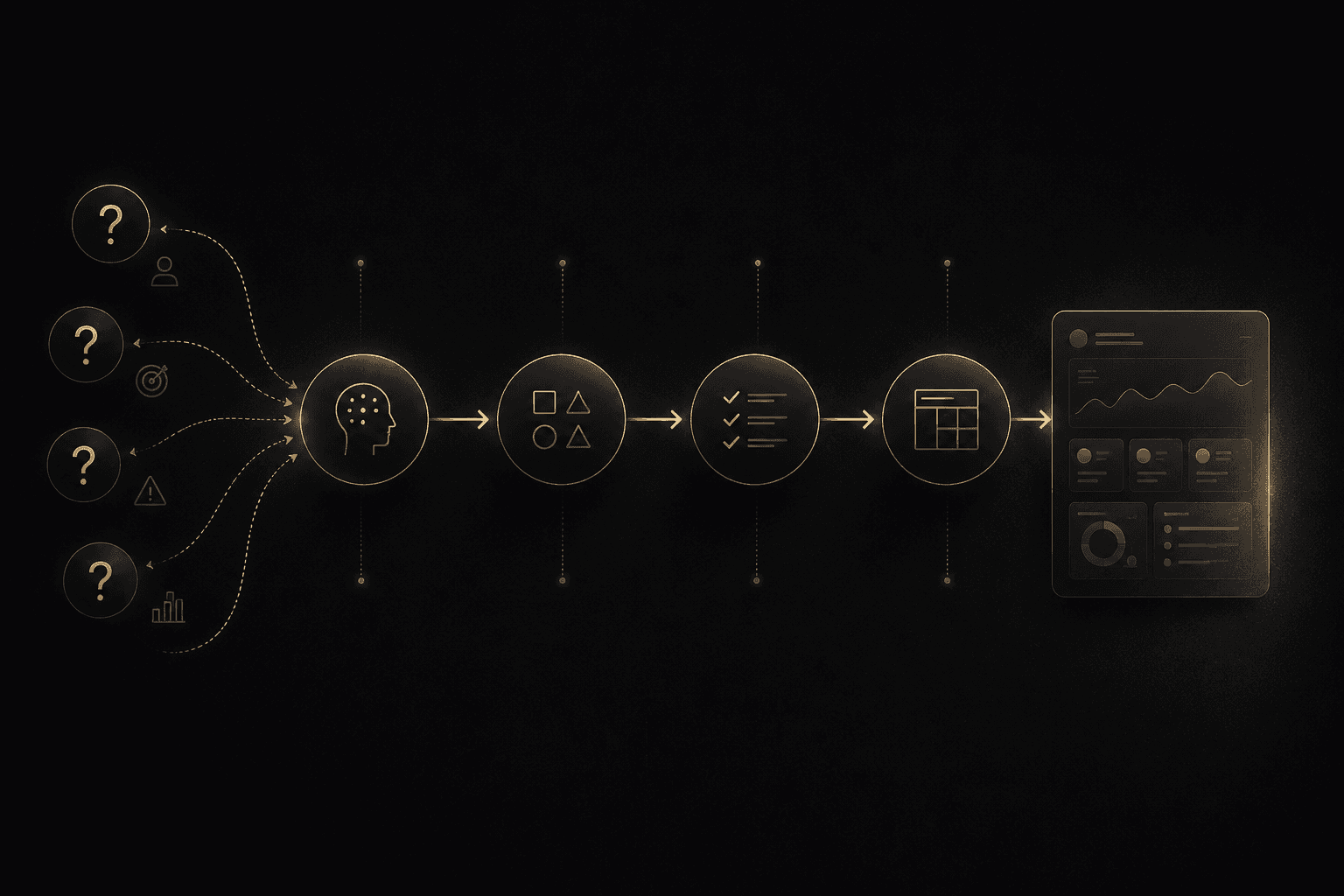
A huge percentage of the final quality of a product is determined before a single line of code is written.
The more context the AI has, the better decisions it can make.
It makes a huge difference when the AI understands:
- Who the product is for
- What problem it solves
- What success looks like
- What the priorities are
- What should be avoided
- What behaviors users have
- What constraints exist
Without that information, the AI fills in the gaps itself.
And those gaps are usually where products fail.
The simple technique that changed my results
Eventually I stopped asking AI to build things immediately.
Instead, I started asking it questions.
Or more accurately, I started making it ask me questions.
Now my workflow usually starts like this:
"I want to create a finance tracker to help couples and families keep track of their expenses and incomes to better manage their budgets. Ask me any questions you have about it."
The AI responds with a list of questions.
I answer them.
Then I ask: "Do you have any other questions?"
Usually it does.
We repeat the process.
Then again.
And again.
After three or four rounds, the AI has accumulated far more context than I would have thought to provide myself.
Only then do I start building.
I call this the interrogation phase.
Why interrogation is better than writing a longer prompt
Some people might argue: "Isn't this just prompt engineering?"
Not exactly.
The problem with writing a long prompt yourself is that you don't know what you don't know.
You might write 2,000 words and still leave out critical information.
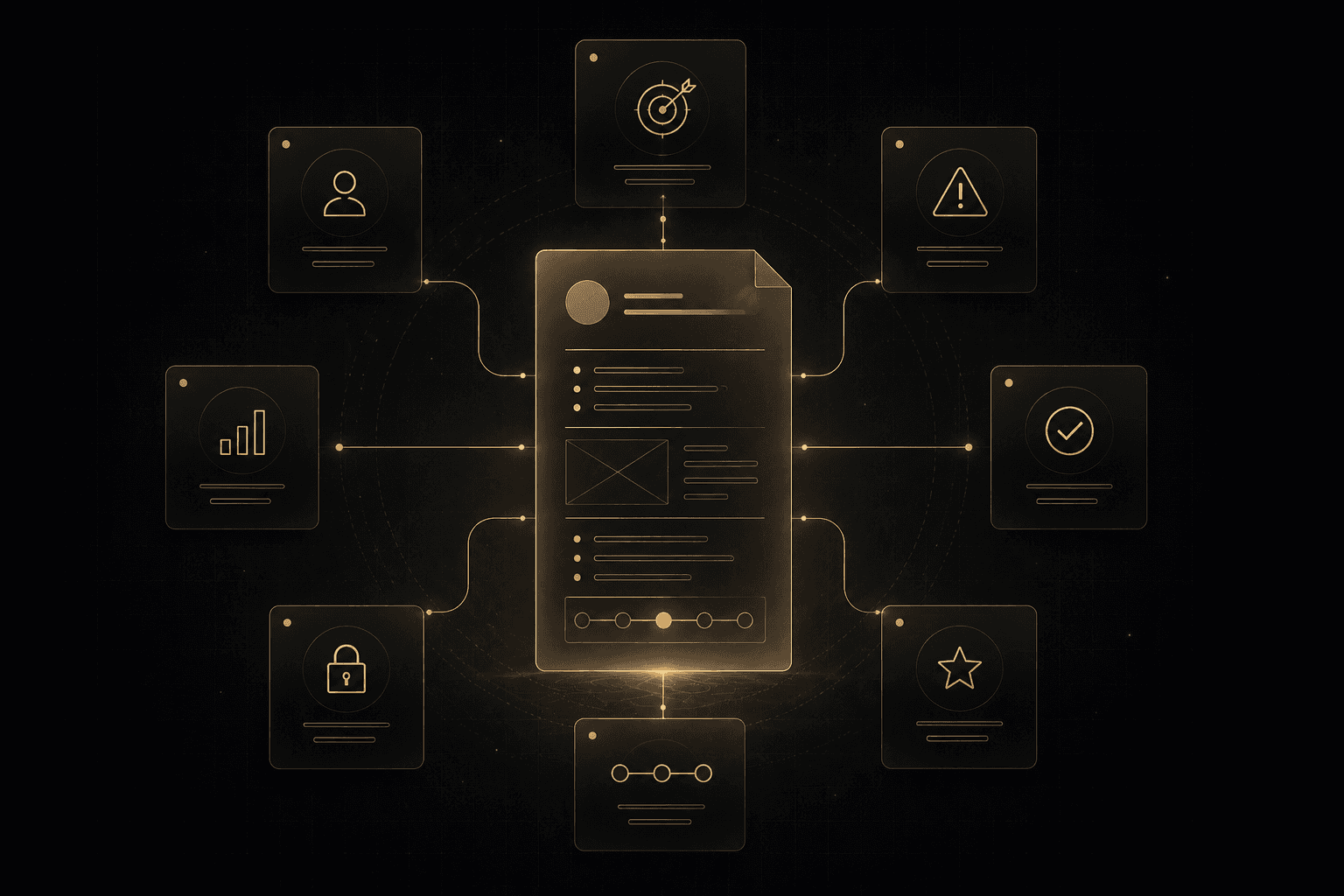
The interrogation process is different because the AI actively uncovers missing context.
It asks about things you forgot.
It challenges assumptions.
It dives deeper into unclear areas.
It forces you to think through details that weren't obvious before.
In many ways, it's closer to a discovery workshop than prompt engineering.
The questions that matter most
Not all questions are equally valuable.
The best questions are the ones that challenge assumptions.
Questions like:
- Who is this actually for?
- Why would someone use this?
- What problem does it solve?
- What is the most important action users need to take?
- What should happen if something goes wrong?
- Why does this feature need to exist?
These questions force clarity.
And clarity improves decisions.
I've noticed that founders often focus on ideas.
The AI helps shift the conversation back to problems.
Many features sound interesting.
Far fewer are actually necessary.
AI is acting like a good product designer
One thing I found interesting is how similar this process feels to product design.
If a founder came to me and said: "I need a new product."
And then gave me two sentences of context.
There is no chance I would immediately start designing.
I would ask questions.
Lots of them.
I'd want to understand:
- The users
- Their goals
- Their frustrations
- The business objectives
- Existing constraints
- Success metrics
Only after understanding the problem would I start designing solutions.
AI is no different.
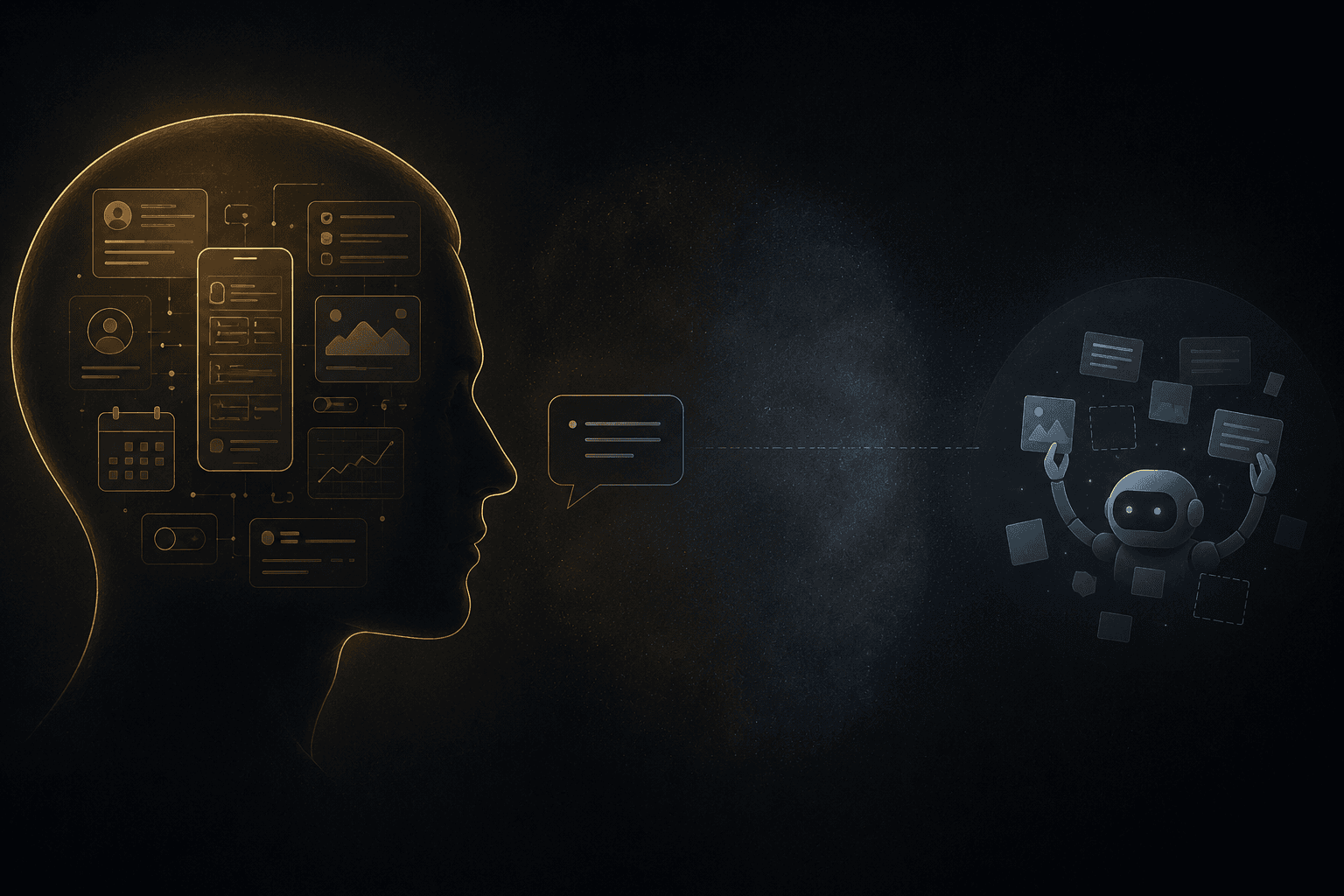
It may have a huge amount of knowledge.
But it has zero knowledge about what's inside your head.
Expecting AI to build the right thing from a two-sentence prompt is like hiring a designer and refusing to answer any questions.
The hidden benefit
The biggest benefit isn't better AI output.
It's better thinking.
The interrogation process forces you to think more clearly about what you're building.
I've spent anywhere from 30 minutes to several hours answering AI questions before starting a project.
At first it felt slow.
Sometimes even boring.
But compared to spending days fixing bad decisions later, it's incredibly fast.
Instead of:
- Build
- Realize it's wrong
- Rebuild
- Realize it's still wrong
- Rebuild again
You spend more time thinking upfront.
The result is usually a better product and significantly fewer iterations.
Vibe coding without interrogation is like hiring a contractor and saying "build me a house"
Imagine hiring a contractor.
You walk up to them and say: "Build me a house."
That's it.
No discussion.
No requirements.
No explanation.
No details.
Then six months later you're angry because the result isn't what you imagined.
Sounds ridiculous.
Yet that's exactly how many people use AI.
They provide almost no context.
The AI fills in the blanks.
Then they're disappointed with the outcome.
The problem isn't the contractor.
The problem is the brief.
The framework I use
My process today is simple:
- Idea or client brief
- Research
- Interrogation
- Build
- Review and refine
The interrogation phase is where most people skip ahead.
That's a mistake.
Because the quality of the build is often determined long before the building starts.

One thing to remember
If you remember only one thing from this article, remember this:
AI tools need context to produce quality results.
The interrogation process helps uncover the context you forgot to provide.
Most people think AI produces mediocre results because the model isn't good enough.
In reality, AI often produces mediocre results because nobody took the time to think deeply enough about what should be built before asking it to build it.